
Every fall, millions of students across the country swing a backpack over one shoulder, stuff it full of books and a laptop, and head out the door without a second thought. Here in Mentor, Ohio, the team at Chagrin River Chiropractic sees the effects of that habit play out in our exam rooms regularly. Back pain, neck tension, rounded shoulders, and even headaches — these are real symptoms that can be traced back to how a backpack is worn and how much it weighs. Whether you’re a parent trying to protect your child’s growing spine, a high schooler carrying textbooks, or a college student hauling a heavy bag across campus, this article is for you. Understanding the connection between backpacks and spinal health is one of the simplest, most overlooked steps toward a healthier back — and it’s something Dr. C.J. Levand is passionate about helping the Mentor community understand.
What does a backpack have to do with spine health? More than most people realize. The spine is a carefully balanced structure, and when you add uneven or excessive load to it daily, it compensates in ways that can lead to muscle strain, postural changes, and chronic discomfort over time. The good news is that with a few adjustments, backpack-related spine stress is largely preventable.
Why Backpacks Matter for Your Spine
The human spine is an incredible structure. It supports your entire upper body weight, protects your spinal cord, and allows you to bend, twist, and move freely. It does all of this while keeping your head balanced directly over your hips in an ideal posture. That balance is the key word here. When you load one side of your body — or add excessive weight to your back — that balance gets disrupted.
For children and teenagers, this concern carries extra weight (no pun intended). Young spines are still developing. Bones, discs, and postural muscles are all maturing throughout childhood and into early adulthood. Consistently placing heavy or improperly distributed loads on a developing spine can influence how posture habits form over time. The American Chiropractic Association has long highlighted backpack overloading as a legitimate concern for pediatric musculoskeletal health, and many conservative care guidelines recommend keeping backpack weight below 10% of a child’s body weight.
Adults are not immune either. College students, commuters, hikers, and anyone carrying a daily work bag faces similar mechanical challenges. If your bag is heavy and your carrying habits are poor, your muscles, joints, and spine are quietly absorbing the cost every single day. Dr. C.J. Levand at Chagrin River Chiropractic in Mentor, OH frequently evaluates patients whose chronic neck and upper back tension can be directly connected to their daily carrying habits.
Common Backpack Habits That Harm the Spine
It’s rarely just the backpack itself that causes the problem. It’s the combination of bag design, packing habits, and carrying style that adds up over time. Here are some of the most common contributors to backpack-related spine stress.
Carrying the Bag on One Shoulder
This is the single most damaging habit. When you carry weight on one side of your body, your spine has to curve laterally to compensate. Your shoulder on the weighted side elevates and your neck tilts. Over time, this pattern can lead to muscular imbalances, chronic tension, and even changes in spinal alignment. It may look effortless and stylish, but one-shoulder carrying is one of the fastest ways to create postural problems.
Overloading the Bag
Heavy backpacks force the spine to work against gravity just to keep you upright. The natural response is to lean forward, which shifts your center of gravity and increases stress on the lumbar spine and intervertebral discs. Research suggests that carrying loads exceeding 10–15% of body weight can measurably alter gait, posture, and spinal curvature. For smaller children, even less than 10% can be problematic depending on their build and fitness level.
Wearing the Bag Too Low
A backpack that hangs low on the back — near the hips or lower — dramatically increases the lever arm of the load. Physics does the rest: the further the weight is from your center of mass, the harder your muscles have to work. The bag should sit close to your body, with the bottom of the pack resting near the low back, not dangling below the waistline.
Skipping the Chest or Waist Straps
Most quality backpacks come with chest and waist straps for a reason. When used correctly, these straps help distribute weight more evenly across the torso and hips, significantly reducing the burden on the shoulders and spine. Most people never use them, which means they’re missing one of the easiest ergonomic wins available to them.
Signs Your Backpack May Be Hurting You
The body is remarkably good at adapting — and remarkably good at hiding early warning signs. Many people carry a problematic backpack for months or years before symptoms become significant enough to seek help. By that point, postural habits have often become ingrained. Here are some signals worth paying attention to.
Neck and upper back pain that feels worse at the end of a school or work day is a common early indicator. Tension headaches that start at the base of the skull and radiate forward can sometimes be traced to the muscles that are overworking to support a heavy or improperly carried bag. Shoulder pain or redness along one shoulder strap line after a long day of carrying is another red flag. Tingling or numbness in the arms or hands may suggest that nerve tissue is being compressed or irritated — a symptom that warrants prompt professional evaluation.
In younger patients especially, parents may notice their child walking with a forward lean or with one shoulder visibly higher than the other. These postural changes may seem minor, but they reflect the spine’s attempt to adapt to an unbalanced load. The team at Chagrin River Chiropractic in Mentor, Ohio takes these early postural changes seriously, because catching them early is always better than addressing them after they’ve become a chronic pattern.
How Chiropractic Care Fits In
Chiropractic care is a non-invasive, drug-free approach to evaluating and supporting musculoskeletal health. When it comes to backpack-related issues, chiropractic care fits in at several levels — from early prevention and education to active care when symptoms are already present.
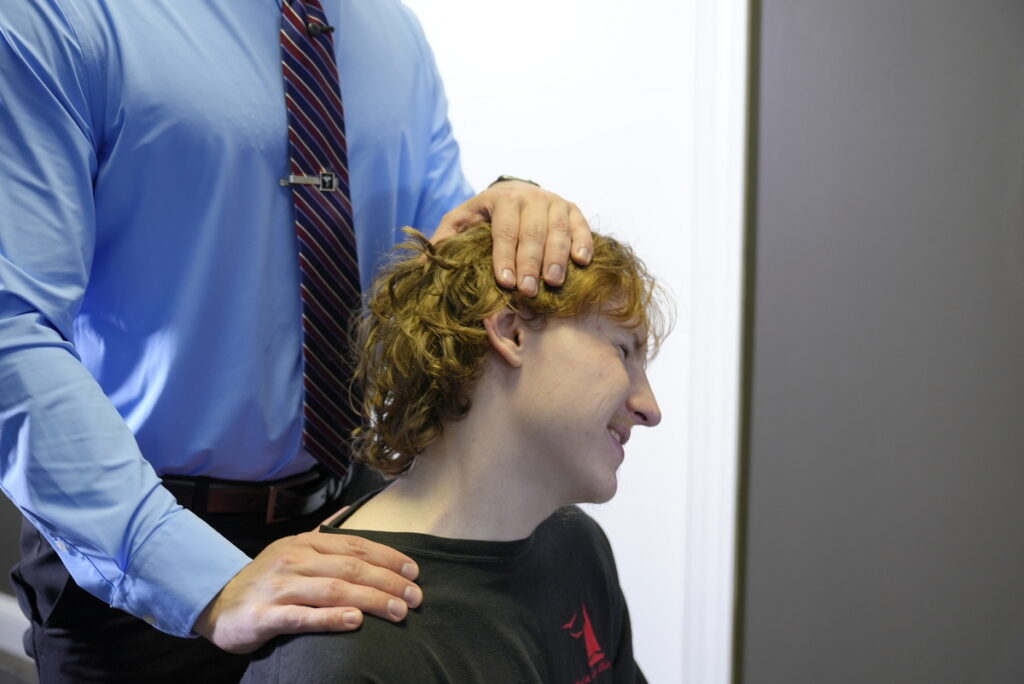
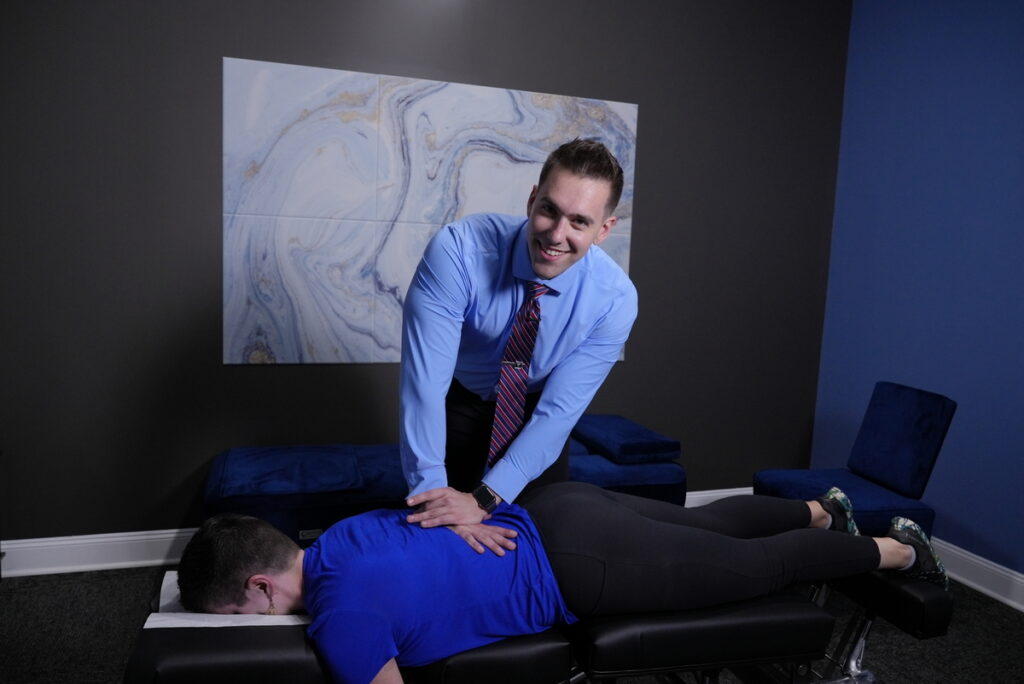
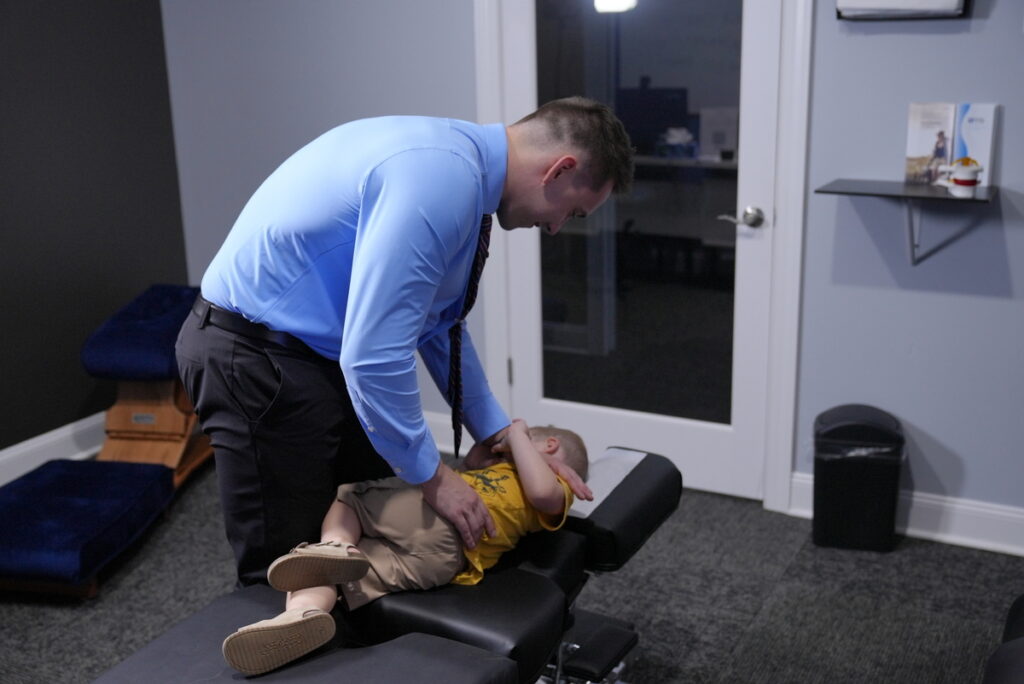
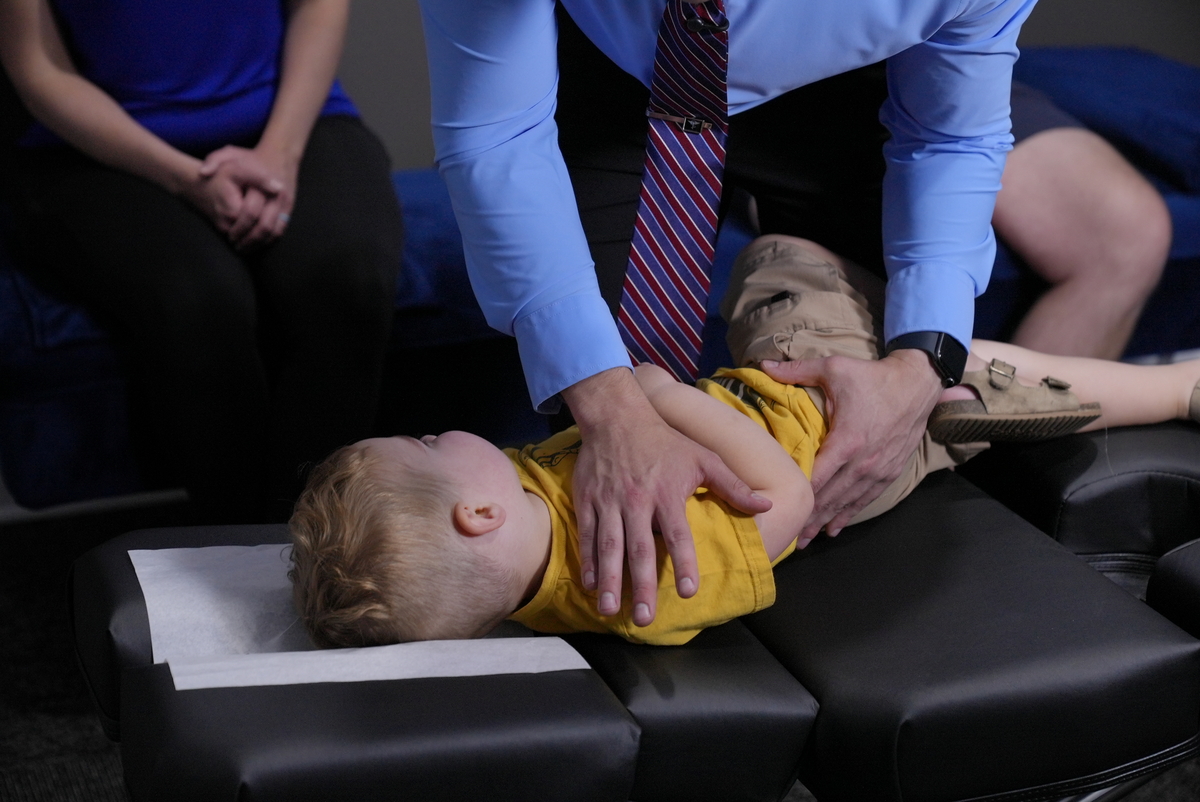
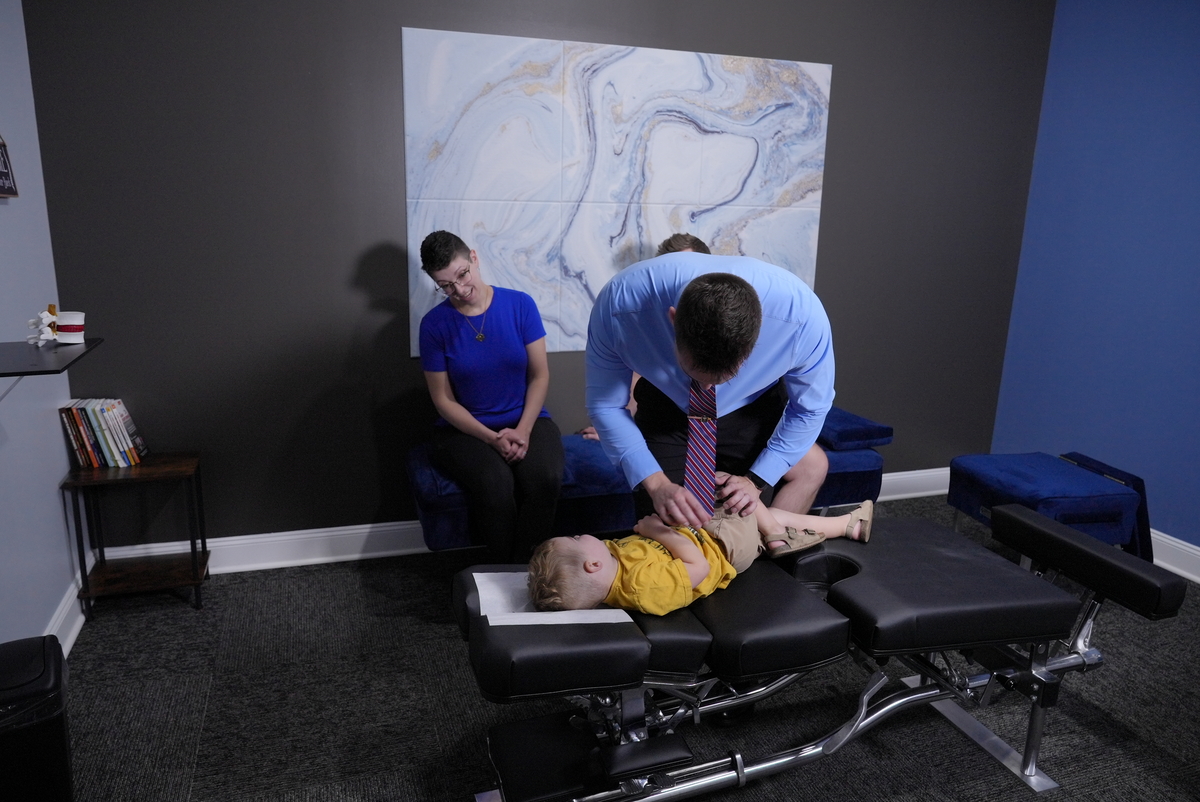
Dr. C.J. Levand begins with a thorough evaluation of posture, spinal alignment, and muscle function. Understanding how a patient carries their daily load — whether it’s a school backpack, a messenger bag, or a work briefcase — is often a key part of that assessment. If spinal joint restrictions or muscular imbalances are found, chiropractic adjustments and related therapies can help restore normal movement and reduce discomfort.
Beyond hands-on care, chiropractic visits at Chagrin River Chiropractic in Mentor, OH include practical guidance on ergonomics, posture correction, and daily habits. Many patients find that a combination of spinal care and simple behavioral changes — like switching to a two-strap backpack and redistributing the contents — leads to meaningful improvement. Evidence from organizations like the National Institutes of Health and the Cochrane Library supports conservative, hands-on care as a reasonable first-line approach for mechanical back and neck pain, including cases tied to postural and ergonomic factors.
Practical Tips for a Spine-Friendly Backpack
The great news is that most backpack-related spine problems are preventable. Small, consistent changes in how you pack and carry your bag can make a meaningful difference in how your spine feels — today and long-term.
Start with the weight. As a general guideline, aim to keep your backpack at no more than 10% of your body weight. If you weigh 150 pounds, your bag should ideally not exceed 15 pounds. For children, especially those in elementary and middle school, aim for the lower end of that range. If your bag feels heavy when you pick it up, it’s too heavy for daily carrying.
Choose the right bag. Look for a backpack with two wide, padded shoulder straps, a padded back panel, and ideally a waist or chest strap. Thin, single straps cut into muscles and nerves more easily and offer no load-sharing ability. A bag with multiple compartments also helps you distribute weight more evenly, keeping heavier items close to the back and centered between the shoulder blades.
Wear it correctly. Both straps, every time. Adjust the straps so the bag sits snugly against your back, with the bottom of the pack resting at your low back — not below it. Fasten the chest strap if the bag has one. This simple step engages the entire torso in carrying the load rather than placing it all on your shoulder joints and spine.
Audit your bag regularly. It’s easy to accumulate items in a backpack over time — extra shoes, forgotten water bottles, a week’s worth of papers. Take a few minutes each week to clear out what isn’t needed for that day. Lightening the load is always the most direct solution.
When to See a Chiropractor
If you or your child experience persistent neck pain, upper back pain, or shoulder discomfort that seems connected to daily backpack use, it’s a reasonable time to schedule a chiropractic evaluation. You don’t have to be in severe pain to benefit from professional input. Early postural assessment and guidance can prevent minor strain patterns from becoming chronic conditions.
That said, there are symptoms that should prompt more urgent attention. Tingling, numbness, or weakness in the arms or hands may indicate nerve involvement that needs prompt evaluation. Chest pain, difficulty breathing, or extreme pain should always be evaluated medically right away. Chiropractic care is an excellent starting point for most mechanical and postural concerns, and Dr. C.J. Levand is trained to identify when a referral to another healthcare provider is appropriate. The goal is always your safety and wellbeing.
Backpack Habit Comparison: Harmful vs. Spine-Friendly
|
Common Harmful Habit |
Spine-Friendly Alternative |
Why It Matters |
|---|---|---|
|
One-shoulder carrying |
Both straps, worn evenly |
Prevents lateral spinal curvature and muscular imbalance |
|
Bag hanging below the waist |
Bag adjusted to sit at mid-to-low back |
Reduces lever arm and spinal load |
|
Overloading (over 10% body weight) |
Pack only what’s needed for that day |
Decreases compressive forces on discs and joints |
|
Thin, single-strap bag |
Wide, padded dual straps with chest strap |
Distributes weight across the torso more evenly |
|
Heavy items packed far from the back |
Heaviest items packed closest to the spine |
Keeps center of gravity close to the body |
Myths vs. Facts About Backpacks and Spine Health
Myth: Kids’ spines are flexible enough to handle a heavy backpack without any real damage.
Fact: While children do have more spinal flexibility than adults, that flexibility does not protect them from the cumulative effects of poor load habits. Growing spines are actually more susceptible to postural patterning, meaning that habits developed during childhood can shape long-term alignment and muscle function. Protecting young spines now pays dividends for decades.
Myth: If it doesn’t hurt right away, the backpack isn’t causing harm.
Fact: Many musculoskeletal problems develop gradually and silently. By the time pain becomes consistent or significant, the underlying pattern — muscular imbalance, restricted joint movement, altered posture — has often been building for months. Pain is a late-stage warning signal, not the only one worth paying attention to.
Myth: Rolling backpacks are always the better option.
Fact: Rolling backpacks reduce the load on the spine when rolling, but they create their own problems. Pulling a bag to one side repeatedly engages one shoulder and trunk more than the other, creating asymmetry. In crowded hallways or on uneven surfaces, rolling bags can also create trip hazards. A properly fitted and packed standard backpack, worn correctly, remains a solid and practical choice for most students.
Myth: Only students need to worry about backpack ergonomics.
Fact: Adults who commute with laptop bags, travel with carry-on packs, or use messenger bags face the same biomechanical risks. The principles of weight distribution and symmetric carrying apply to any age. At Chagrin River Chiropractic, Dr. C.J. Levand works with patients of all ages and lifestyles to evaluate how their daily routines may be contributing to spinal stress.
Myth: Chiropractic care is only for people with severe back injuries.
Fact: Chiropractic care is well-suited for early intervention, prevention, and education — not only for acute or severe conditions. Evaluating posture, identifying mechanical imbalances, and offering practical guidance are all within the scope of a chiropractic visit, and addressing issues early is almost always more effective than waiting until pain is severe.
Final Thoughts from Chagrin River Chiropractic in Mentor, Ohio
A backpack is an everyday tool — one that most of us don’t think twice about until something starts to hurt. But the way you carry your bag, how much you put in it, and how it fits your body all have a real and meaningful effect on your spinal health over time. The encouraging thing is that most of these factors are completely within your control.
Here in Mentor, Ohio, Dr. C.J. Levand and the team at Chagrin River Chiropractic genuinely care about helping families and individuals in this community protect their long-term health. Whether you’re a parent wondering if your child’s backpack is too heavy, a student dealing with end-of-day neck pain, or an adult looking to understand why your shoulders are always tight, we’re here to help you find answers and real solutions. You don’t have to live with preventable pain — and a conversation with a knowledgeable chiropractor is often the best first step toward feeling better and carrying your load a little more easily.
Frequently Asked Questions
How heavy should a backpack be for a child?
Most conservative care guidelines recommend keeping a child’s backpack at no more than 10% of their body weight. For a child weighing 60 pounds, that means no more than 6 pounds in the bag. Lighter is always better when possible, especially for younger children whose spines and postural muscles are still developing.
Can a backpack cause scoliosis?
There is no established evidence that carrying a heavy backpack directly causes structural scoliosis, which has its own complex set of causes. However, heavy or improperly carried backpacks can create muscular imbalances and postural patterns that may make existing curvatures more noticeable or worsen functional scoliosis. Regular spinal screening is a good idea for growing children.
What type of backpack is best for spine health?
Look for a backpack with two wide, padded shoulder straps, a padded back panel, and ideally a waist or sternum (chest) strap. Multiple compartments help distribute weight evenly. The bag should sit close to the body and not hang below the mid-to-lower back when worn.
How often should I see a chiropractor for backpack-related pain?
The frequency of chiropractic care depends on the severity of your symptoms, your overall spinal health, and your daily habits. Dr. C.J. Levand at Chagrin River Chiropractic in Mentor, OH will develop an individualized care plan based on your specific evaluation. Many patients see meaningful improvement with a short course of care paired with ergonomic changes.
Is it normal for kids to complain about back pain from backpacks?
It is common, but it’s not something to dismiss as normal or inevitable. Persistent back or neck pain in children related to backpack use is a signal worth investigating. A chiropractic evaluation can help identify whether postural stress, muscle strain, or spinal joint issues are contributing — and what steps can help.
Can I prevent backpack-related spine problems without seeing a chiropractor?
Absolutely. Following ergonomic guidelines — keeping bag weight low, using both straps, adjusting bag height, and packing wisely — can go a long way toward protecting your spine. That said, if symptoms are already present or you have concerns about posture and alignment, a professional evaluation at a place like Chagrin River Chiropractic can give you a clearer picture of what’s happening and what to do about it.
TL;DR
-
Heavy and improperly worn backpacks create real mechanical stress on the spine, especially in children and teenagers whose spines are still developing.
-
One-shoulder carrying, bags worn too low, and overloaded packs are the most common contributors to backpack-related neck and back pain.
-
A spine-friendly backpack should weigh no more than 10% of the wearer’s body weight, be worn with both padded straps, and sit at mid-to-low back height.
-
Chiropractic care can help address postural imbalances, spinal joint restrictions, and muscular tension linked to poor backpack habits — and can provide practical ergonomic guidance.
-
If you or your child are experiencing persistent pain, postural changes, or arm tingling related to backpack use, Dr. C.J. Levand at Chagrin River Chiropractic in Mentor, Ohio is a great place to start your evaluation.