

If you’ve ever caught yourself hunched over your phone, chin jutted forward, shoulders rounding toward your chest — you’re not alone. In fact, this has become one of the most common posture patterns we see here at Chagrin River Chiropractic in Mentor, OH. We call it “tech neck,” and along with desk slouch and poor phone posture, it has quietly become one of the biggest threats to spinal health in the modern era. The good news? Understanding what’s happening in your body is the first step toward real, lasting change.
What Is Tech Neck, Exactly?
Tech neck is a term used to describe the neck pain, stiffness, and postural strain that develops from repeatedly tilting the head forward and downward to look at screens. Whether you’re scrolling through your phone, staring at a monitor, or reading on a tablet, the position places enormous mechanical stress on your cervical spine — the seven vertebrae that make up your neck. Over time, this repeated strain can cause muscle imbalances, nerve irritation, and structural changes that affect far more than just your neck.
The Biomechanics Behind the Problem
Your head weighs roughly 10 to 12 pounds when it’s sitting directly over your shoulders in a neutral position. That’s already a significant load for your spine to support all day. But here’s where things get concerning: research published in the spine health community suggests that for every inch your head drifts forward from that neutral position, the effective load on your cervical spine increases dramatically. By the time your chin is jutted just two or three inches forward — which is completely normal when looking at a phone — the stress on your neck muscles and vertebrae can feel equivalent to carrying something much heavier.
This postural position forces the muscles at the back of your neck to work overtime just to keep your head from drooping completely. Over time, those muscles become chronically tight and fatigued. Meanwhile, the muscles in the front of your neck weaken from underuse. This imbalance is what chiropractors refer to as a forward head posture, and it’s one of the most common postural distortions Dr. C.J. Levand sees in patients at Chagrin River Chiropractic every week.
The cervical spine also has a natural, gentle inward curve called a lordosis. Sustained forward head posture can gradually flatten or even reverse this curve. When the curve is lost, your spine loses one of its natural shock-absorbing mechanisms, which increases the risk of degenerative changes over time.
Signs, Symptoms, and What Your Body Is Telling You
Tech neck doesn’t always announce itself loudly at first. It tends to creep in gradually, which is part of what makes it so sneaky. Many people here in Mentor, OH assume that the stiffness they feel after a long workday is just “normal” aging or tiredness. In reality, their bodies are sending early warning signals worth paying attention to.
Neck pain and stiffness are the most obvious signs, but the symptoms often extend well beyond the neck itself. Headaches that start at the base of the skull and radiate forward toward the forehead or behind the eyes are extremely common. These are often tension-type headaches driven by the same overworked muscles that are struggling to support your forward-leaning head all day.
Upper back tightness and shoulder tension are also hallmark symptoms. When your head drifts forward, your shoulder blades tend to round forward as well, tightening the chest muscles and straining the muscles between and around the shoulder blades. Some patients also describe a dull aching between the shoulder blades that never quite seems to go away, no matter how often they stretch or roll their shoulders.
In more progressed cases, nerve-related symptoms can develop. Tingling, numbness, or a radiating ache down one or both arms may indicate that the cervical spine is being compressed or irritated in ways that affect the nerves exiting that area. This is a sign that professional evaluation is important sooner rather than later.
Desk Slouch and Phone Posture: Two Sides of the Same Problem
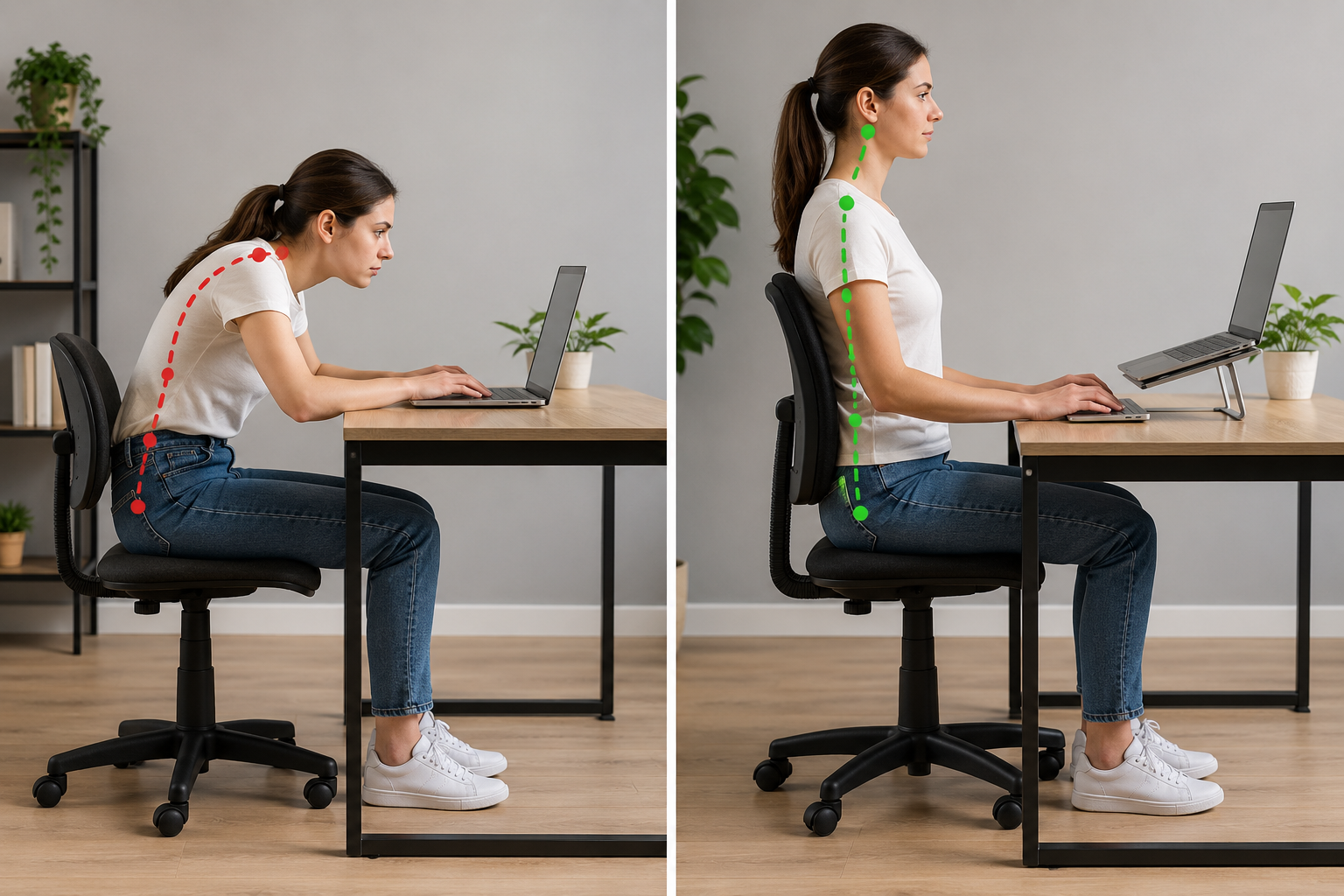
Tech neck often gets the most attention, but desk slouch is just as significant — and the two frequently go hand in hand. Desk slouch refers to the gradual collapse of posture that happens when someone sits at a workstation for hours without ergonomic support. The lower back loses its natural lumbar curve, the mid-back rounds forward into a “C” shape, and the head follows by drifting forward. The entire spine is affected, not just the neck.
What makes desk slouch especially challenging is that it feels comfortable in the short term. Our bodies are remarkably good at adapting to whatever position we put them in repeatedly. But “comfortable” and “healthy” are not the same thing. Over months and years, the muscles, ligaments, and spinal discs begin to adapt to that slouched posture as if it were normal — leading to chronic stiffness, reduced range of motion, and an increased risk of disc-related problems.
Phone posture takes this a step further. When we look at our phones, we’re rarely sitting at an ergonomic workstation. We’re on the couch, in bed, walking, or hunched over in the car. The angles are often far more extreme, and we hold these positions for long, uninterrupted stretches. Dr. C.J. Levand at Chagrin River Chiropractic frequently points out that it’s not just one long session that causes the problem — it’s the cumulative effect of thousands of small repetitions over months and years.
|
Posture Pattern |
Primary Area Affected |
Common Symptoms |
Common Triggers |
|---|---|---|---|
|
Tech Neck (Forward Head Posture) |
Cervical spine, upper neck muscles |
Neck pain, headaches, arm tingling |
Prolonged phone and tablet use |
|
Desk Slouch |
Thoracic and lumbar spine, shoulder blades |
Mid/low back ache, shoulder tension, fatigue |
Long hours at a workstation without breaks |
|
Phone Posture |
Cervical spine, upper traps, jaw |
Neck stiffness, upper back tightness, tension headaches |
Scrolling on a phone held low, often in casual settings |
|
Rounded Shoulders |
Thoracic spine, pectoral muscles, rotator cuff |
Shoulder ache, reduced arm range of motion |
Typing, driving, extended screen time |
How Chiropractic Care Fits Into the Solution
Chiropractic care is one of the most well-established conservative, non-invasive approaches for addressing the spinal and musculoskeletal issues that arise from tech neck and desk slouch. The American College of Physicians and other major health organizations have endorsed spinal manipulation as a recommended first-line, non-pharmacological option for certain types of neck and back pain — which is exactly what many tech neck sufferers experience.
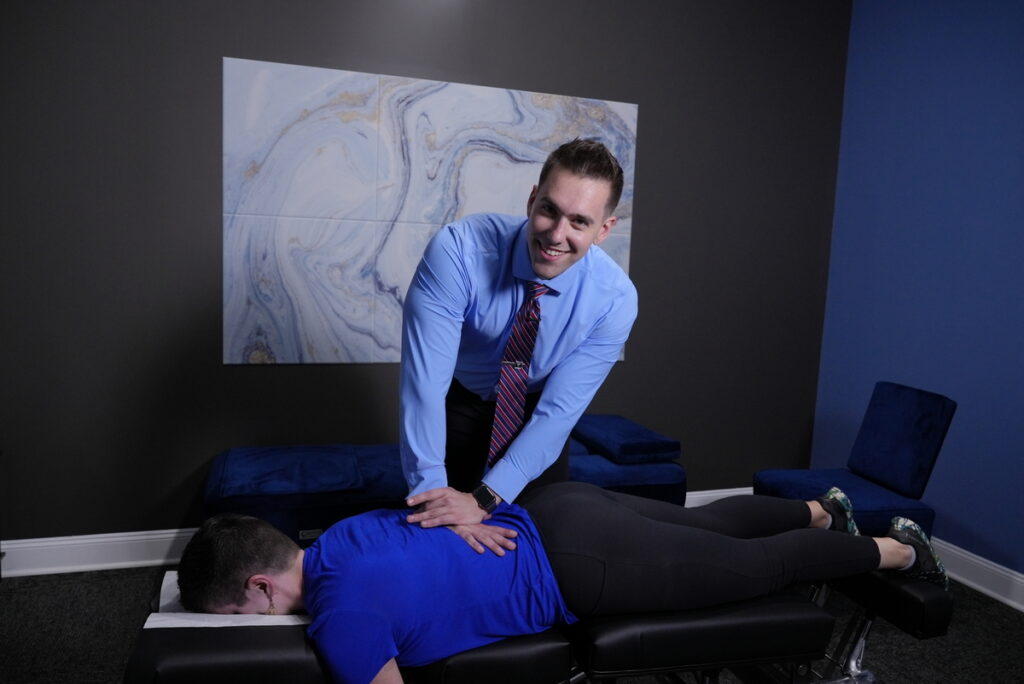
At Chagrin River Chiropractic, Dr. C.J. Levand begins with a thorough evaluation to understand not just where a patient hurts, but why. That means looking at posture, range of motion, spinal alignment, and the patterns of tension and weakness that have developed over time. From there, a care plan is tailored to the individual.
Chiropractic adjustments help restore proper movement and alignment in the cervical and thoracic spine, which can reduce nerve irritation and allow the surrounding muscles to function more efficiently. Patients often notice that their neck moves more freely and their headaches become less frequent after their spine is moving better. Beyond adjustments, care may also include soft tissue techniques, recommendations for specific rehabilitative movements, and guidance on ergonomic habits — all designed to support long-term spinal health rather than just masking symptoms.
The goal at Chagrin River Chiropractic is never to create dependence on care. It’s to help people in Mentor and the surrounding communities understand what’s happening in their bodies, make real improvements, and develop the habits that reduce the likelihood of the problem coming back.
Practical Tips for Better Posture Every Day
Small, consistent changes make a meaningful difference when it comes to postural health. One of the most impactful adjustments is simply raising your screen. Whether it’s your phone, monitor, or tablet, bringing it closer to eye level immediately reduces the forward head angle. This one change alone can significantly decrease the cumulative strain on your cervical spine throughout the day.
Another often-overlooked habit is taking regular movement breaks. The human body was not designed to hold any single position for hours at a time — even a good one. Setting a reminder to stand, walk, and gently move your neck and shoulders every 30 to 45 minutes helps reset muscular tension before it has a chance to build up. A quick chin tuck exercise, where you gently draw your chin straight back rather than downward, is a simple way to begin counteracting forward head posture throughout the day.
Your workstation setup matters enormously as well. Your monitor should be at approximately arm’s length and positioned so the top third of the screen is at or near eye level. Your feet should be flat on the floor, hips and knees at roughly 90 degrees, and your lower back should have gentle support. These aren’t complicated changes — but they add up to real protection for your spine over time.
Finally, be honest with yourself about your phone habits. Holding your phone at chest or lap level while scrolling is one of the easiest ways to drive forward head posture. Simply lifting the device closer to eye level, even during casual use, takes almost no extra effort but makes a genuine difference for your neck.

When to See a Chiropractor
If your neck stiffness, headaches, or upper back tension have been present for more than a few weeks, it’s a good time to have your spine evaluated. Many people wait far too long, assuming the discomfort will simply resolve on its own. Sometimes it does — but often, the underlying postural and alignment issues continue to build quietly until symptoms become harder to manage.
You should seek professional care sooner if you’re experiencing any of the following: tingling or numbness in the arms or hands, sharp pain with head movement, headaches that are increasing in frequency or severity, or significant disruption to your daily activities or sleep. These symptoms can indicate more involved cervical spine issues that benefit from evaluation without delay.
There are also red flags that warrant a medical evaluation rather than — or in addition to — chiropractic care. These include severe neck pain following a trauma or accident, symptoms accompanied by fever, unexplained weight loss, or any loss of coordination or balance. Dr. C.J. Levand and the team at Chagrin River Chiropractic are always happy to help determine the most appropriate path forward, including coordinating with other healthcare providers when that’s in a patient’s best interest.
Myth: Tech Neck Only Affects Young People Who Are Always on Their Phones
Myth: Tech neck is a “young person’s problem” caused by too much social media use.
Fact: Tech neck affects people of all ages. Anyone who uses a computer, phone, tablet, or even reads with their head tilted forward can develop forward head posture. In fact, many of the patients Dr. C.J. Levand sees at Chagrin River Chiropractic in Mentor, OH are working professionals in their 30s, 40s, and 50s whose symptoms are largely driven by desk work — not just phone use.
Myth: If You Don’t Have Pain, Your Posture Is Fine
Myth: No pain means no problem with posture.
Fact: Postural distortions often develop silently over months or years before pain emerges. By the time discomfort sets in, the underlying muscular and structural imbalances may already be well established. Regular posture awareness and periodic professional evaluation are valuable tools for prevention, not just pain treatment.
Myth: Sitting Up Straight All Day Solves the Problem
Myth: Just forcing yourself to sit upright will fix your posture.
Fact: Static “perfect” posture held rigidly all day can actually create its own muscular fatigue. What matters more is movement variety, ergonomic setup, and building the muscular endurance and flexibility to support good posture naturally. Chiropractic care, movement habits, and ergonomic adjustments work together far better than willpower alone.
Myth: Chiropractic Adjustments Are Only for Back Pain
Myth: Chiropractors only treat the lower back.
Fact: Chiropractors are trained in the assessment and care of the entire spine and musculoskeletal system. Neck pain, headaches, upper back tension, and posture-related issues are all well within the scope of chiropractic care, and evidence indicates that spinal manipulation can be effective for cervicogenic (neck-related) headaches and neck pain.
Myth: Tech Neck Will Resolve on Its Own With Rest
Myth: Taking a day off from screens will fix the problem.
Fact: While rest can reduce acute discomfort temporarily, it doesn’t address the underlying muscle imbalances, loss of cervical curve, or spinal misalignments that have developed over time. Without addressing the root causes, symptoms typically return once normal activity resumes.
Final Thoughts From Chagrin River Chiropractic in Mentor, OH
Technology isn’t going anywhere, and neither is the demand to stay connected. But that doesn’t mean your spine has to pay the price. Tech neck, desk slouch, and poor phone posture are real, measurable health concerns — but they’re also very addressable with the right knowledge and the right support.
Here at Chagrin River Chiropractic, we genuinely care about the health of our Mentor community. Dr. C.J. Levand and our team work with patients every day who come in frustrated by symptoms they’ve been living with for far too long. Time and again, we see that when people understand what’s happening in their bodies and take consistent steps to address it, they feel meaningfully better — and they stay that way.
You don’t have to accept stiffness, headaches, or nagging tension as your new normal. If any of what you’ve read today sounds familiar, we’d encourage you to take it as a sign that your body is asking for some attention. Reach out to the team at Chagrin River Chiropractic in Mentor, OH, and let’s take a look together.
Frequently Asked Questions
How do I know if I have tech neck?
Common signs include persistent neck stiffness or pain, tension headaches, upper back tightness, and soreness at the base of the skull. If these symptoms worsen after prolonged phone or computer use, tech neck is a likely contributing factor. A chiropractic evaluation can help confirm what’s going on and identify any underlying spinal changes.
Can tech neck cause headaches?
Yes. Many headaches associated with tech neck are cervicogenic, meaning they originate from tension and dysfunction in the cervical spine and surrounding muscles. These headaches often start at the base of the skull and radiate forward. Research indicates that chiropractic care can be an effective approach for this type of headache.
How long does it take to correct forward head posture?
The timeline varies depending on how long the pattern has been present and how consistently someone follows through with care and postural habits. Some patients notice improvement relatively quickly, while more established patterns may take longer to address. There are no guaranteed timelines, but consistent effort typically yields meaningful results.
Is tech neck permanent?
In most cases, tech neck is not permanent — especially when addressed early. With appropriate chiropractic care, targeted movement habits, and ergonomic improvements, many people see significant improvement. If structural changes to the cervical curve have occurred over many years, complete reversal may be more limited, but functional improvement is still very achievable.
What is the best sleeping position for tech neck?
Sleeping on your back with a supportive cervical pillow that maintains the natural neck curve is often recommended. Side sleeping with proper pillow height can also be appropriate. Stomach sleeping is generally discouraged because it requires extended neck rotation and can worsen cervical strain over time.
Should I see a chiropractor or physical therapist for tech neck?
Both chiropractors and physical therapists can play a helpful role in managing tech neck. Chiropractors focus specifically on spinal alignment, joint mobility, and nerve function, while physical therapists often emphasize rehabilitation exercises. In many cases, the approaches complement each other. Dr. C.J. Levand at Chagrin River Chiropractic can help determine the best direction based on your specific situation.
TL;DR — Key Takeaways
-
Tech neck, desk slouch, and poor phone posture place significant mechanical stress on the cervical and thoracic spine, leading to pain, stiffness, headaches, and potentially nerve-related symptoms over time.
-
Forward head posture increases the effective load on your neck muscles and can gradually flatten the natural cervical curve, affecting spinal health long-term.
-
Chiropractic care offers a conservative, non-invasive approach that addresses spinal alignment, muscle function, and the root causes of postural strain — not just symptoms.
-
Simple daily habits — raising your screen, taking movement breaks, and performing chin tuck exercises — can meaningfully reduce cumulative strain on your spine.
-
If neck pain, headaches, or upper back tension have been present for more than a few weeks, or if you’re experiencing arm tingling or numbness, a professional evaluation at Chagrin River Chiropractic in Mentor, OH is a smart next step.